
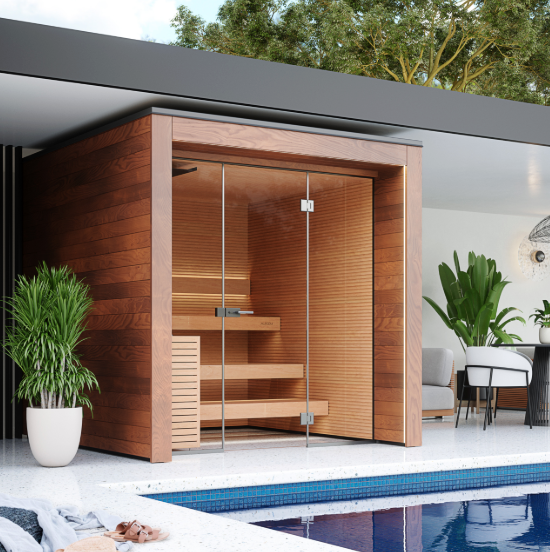
Picture this: you’ve finally decided to turn that spare room into your dream wellness retreat. Maybe it’s an infrared sauna, a yoga studio, or a full-on relaxation zone. You’ve got the vision. But have you thought about what goes on behind the walls to make it all work?
Turns out, there’s some seriously clever technology helping designers and builders create spaces that aren’t just beautiful — they’re built to actually support your wellbeing from the ground up.
It All Starts With a Digital Twin
Before a single brick is laid or a wall is knocked through, today’s best construction teams build your space digitally first. Think of it like a hyper-detailed video game version of your home. Every pipe, wire, wall and ventilation duct is mapped out in 3D before anyone picks up a hammer.
This is where bim modelling comes in. BIM stands for Building Information Modelling, and it’s basically a way of creating a smart 3D model of a building that holds loads of useful data — not just what it looks like, but how everything fits together, what materials are used, and how different systems (like heating, plumbing, and electrics) interact.
Why does that matter for a wellness space? More than you’d think.
Getting the Environment Just Right
If you’ve ever used an infrared sauna or spent time in a properly designed wellness room, you’ll know that the environment is everything. The temperature needs to be spot on. The ventilation has to work perfectly. The insulation can’t have any gaps. And all the electrical systems need to handle the load without a hitch.
When designers use 3D modelling tools to plan these spaces, they can spot problems before they happen. Imagine finding out after the build that your ventilation clashes with a structural beam, or that the electrical supply isn’t routed properly for your infrared panels. That’s an expensive headache nobody wants.
With digital coordination, all of those clashes get caught on screen — not on site. It saves time, money, and a whole lot of stress.
Wellness Spaces Are Getting More Complex
Home wellness isn’t just a candle and a bath bomb anymore (though there’s absolutely nothing wrong with that). People are investing in professional-grade equipment — infrared therapy units, steam rooms, cold plunge pools, air purification systems — and fitting all of that into a residential space takes proper planning.
These aren’t plug-and-play setups. They need:
- Dedicated electrical circuits that can handle higher power demands
- Moisture management so your walls don’t turn into a science experiment
- Proper ventilation to keep air quality high and humidity controlled
- Thermal insulation that keeps heat where it should be
The more complex the setup, the more important it is to get every detail right at the design stage. That’s exactly what modern 3D design coordination is built for — making sure every trade and every system plays nicely together.
Why Should You Care?
You might be thinking, “I’m not a builder — why does this matter to me?” Fair question. Here’s the thing: when the tech behind a build is done properly, you get a better end result. Your wellness room works exactly as it should from day one. No surprise costs. No ripping out walls to fix something that should’ve been caught earlier.
And if you’re investing in quality wellness equipment for your home, it makes sense to invest in the space that houses it too. A top-of-the-range infrared sauna in a poorly designed room is a bit like putting a Formula 1 engine in a shopping trolley. It’ll work, but it won’t be the experience you were hoping for.
The Bigger Picture
This shift towards smarter building isn’t just about wellness rooms, of course. It’s changing how we think about homes in general. Energy efficiency, air quality, natural light, acoustics — all of these things affect how we feel in a space, and all of them can be optimised when the design process is done digitally.
We’re living in a time where the tools exist to build spaces that genuinely support our health. The gap between “a room with some nice equipment” and “a purpose-built wellness environment” is closing fast, thanks to advances in how buildings are designed and coordinated.
Wrapping Up
Whether you’re planning a full home renovation or just dreaming about converting that garage into your personal retreat, it’s worth knowing that the technology behind modern construction has come on leaps and bounds. The days of crossed fingers and “hope it all fits” are fading.
Smart digital planning means your wellness space can be designed with precision — every wire, pipe, and panel accounted for before the build even begins. And that means you get to focus on the good stuff: actually using the space to feel brilliant.
Now, who’s ready to sweat?