
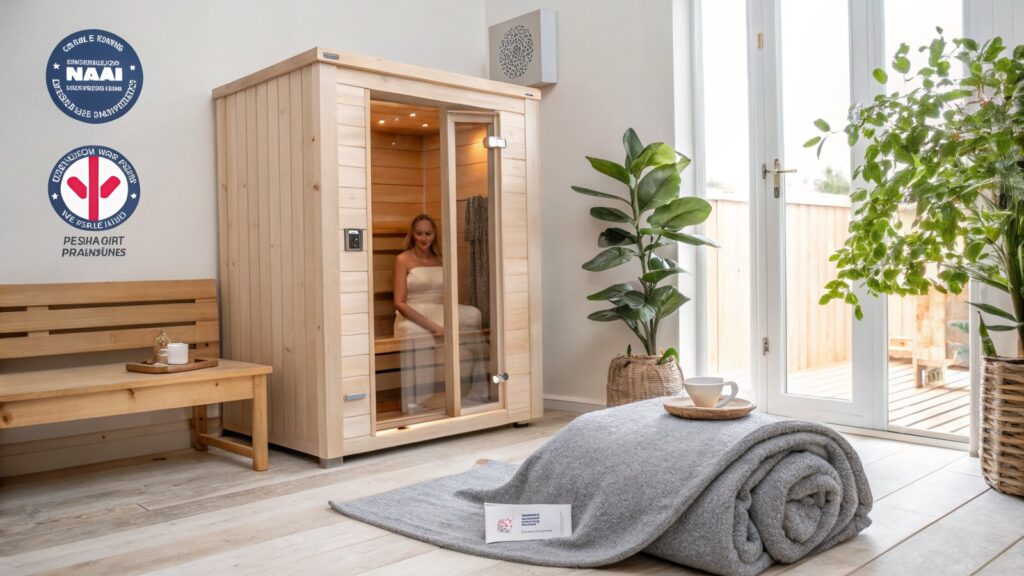
The sauna blanket vs infrared sauna question usually comes down to one honest trade-off: how much space and money you are willing to commit to home heat therapy. Both use far-infrared heating elements, both produce a deep sweat, and both can fit into a regular UK home. The difference is everything around the heat: the price you pay up front, the room it eats, how long it lasts, and how it actually feels to use. This guide compares the two on the points that change a buying decision, with verified UK figures and no inflated claims.
To be clear about what these are: an infrared sauna blanket is a padded, foldable mat with flexible heating panels sewn inside. You lie on a flat surface, zip or wrap it around your body, and your head stays out. A home infrared sauna cabin is a wooden enclosure, usually one or two person, lined with rigid infrared panels that radiate heat at you from several directions while you sit upright. Same wavelength, very different package.
Upfront cost: the gap is large and real
This is the cleanest dividing line. Infrared sauna blankets in the UK typically sell from around £140 at the budget end up to roughly £700 for well-built, lower-EMF models from established wellness brands. A home infrared sauna cabin is a different order of spend: one to two person cabins commonly run from about £1,000 to £5,000 or more, with premium full-spectrum models above that.
So the entry price of a cabin is roughly the top price of a good blanket. If budget is the deciding factor, the blanket wins this round before any other point is considered. The cabin only justifies its cost if you value the things it does that a blanket cannot, which the rest of this comparison covers.
Running cost: both are cheaper than people expect
Neither option is expensive to run, but the blanket is cheaper. A sauna blanket draws roughly 600 to 800 watts. A 45-minute session at the higher end uses around 0.5 to 0.6 kWh. A one or two person infrared cabin uses more, commonly around 1.5 to 2 kWh for a similar session, because it has more and larger panels and a larger space to bring up to temperature.
Putting real money against that: under the Ofgem energy price cap for 1 July to 30 September 2026, the average electricity unit rate is 26.11 pence per kWh for a standard variable tariff paid by Direct Debit (figures from Ofgem). On that basis a blanket session costs roughly 13 to 16 pence, and a cabin session roughly 40 to 55 pence. Daily use for a month is a few pounds for a blanket and somewhere around twelve to sixteen pounds for a cabin. Your exact figure depends on your tariff, region and session length, but the order of magnitude holds: running cost is a minor factor for both.
Space and storage: this is where many UK homes decide
If you live in a flat or a house without a spare room, this section may settle the whole thing. A sauna blanket folds down to roughly the size of a rolled sleeping bag and lives under a bed, in a wardrobe or on a shelf. It needs a flat surface to use (a bed, sofa or floor mat) and nothing more. You can use it in a bedroom and put it away in two minutes.
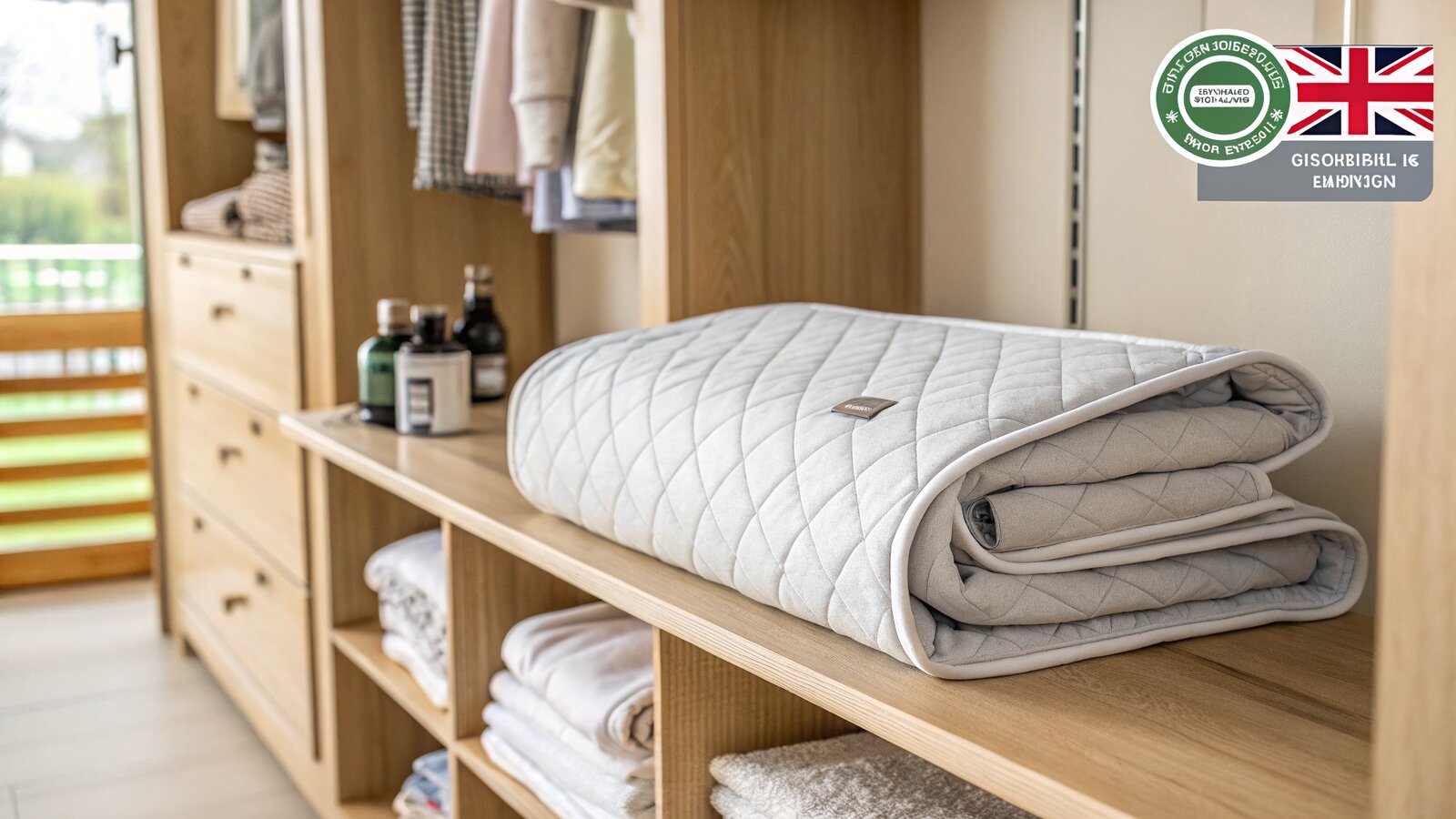
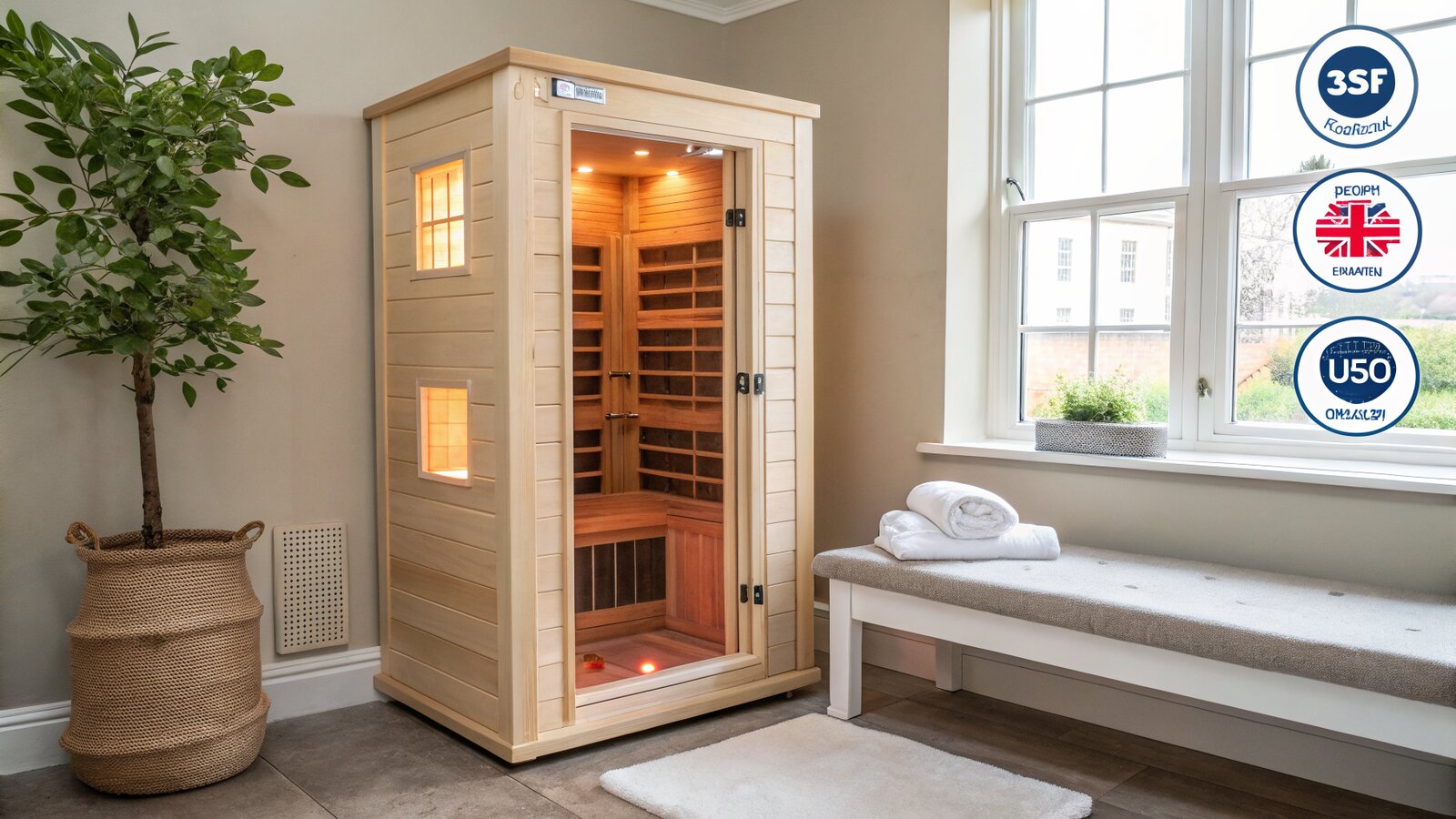
A cabin is permanent furniture. A one person model still needs a floor footprint of around a square metre plus clearance to open the door and sit comfortably, and it stays there. It is heavy, it is not realistically moved once assembled, and it wants a dedicated, reliable power supply; larger units may need an electrician to confirm the circuit can take the load. For a dedicated home wellness room, a garage conversion or a large bathroom, that is fine. For a one-bedroom flat, it is usually a non-starter.
Heat experience and temperature: different feel, similar sweat
Infrared cabins run at a relatively low air temperature compared with a traditional Finnish sauna, generally around 45 to 60 degrees Celsius, because the infrared warms your body directly rather than heating the air. You sit upright, the heat surrounds you, the air is breathable, and it feels like a proper sauna session you can share with one other person or stretch out in.
A blanket works by direct contact, so its internal heating surfaces run hotter, often up to around 80 degrees Celsius at the top settings, against your skin through the lining. The sweat is comparable, sometimes more intense because the heat is pressed against you. The experience is more clinical: you are lying still, wrapped, head out, usually watching something or resting. Some people find it deeply relaxing; others dislike being immobilised. The cabin is the more pleasant, sociable ritual. The blanket is the more efficient, get-it-done session.
Ease of use, cleaning and maintenance
A blanket is faster to start: plug in, set the temperature and timer, lie down, and it is usable in a few minutes. The downside is cleaning. You sweat directly onto the inner lining, so most people use a towel or a cotton liner inside, and you wipe the interior down after every session. Skip that and the lining degrades faster and can start to smell.
A cabin takes longer to warm through, often ten to fifteen minutes of pre-heat, but maintenance is lighter day to day: wipe the bench and floor, keep it ventilated, and the wood looks after itself for years. The maintenance burden flips over time. The blanket is easy to own but needs diligent cleaning; the cabin is harder to install but easier to live with.
Durability and lifespan
This matters more than the headline price. Sauna blankets are consumable. With regular use, many last around one to three years before the flexible heating elements, the zips or the lining give out, because they are repeatedly flexed, heated and exposed to sweat. A good one lasts longer with careful use and a liner, but treat it as a wearing item.
A quality infrared cabin is built to last fifteen to twenty years or more. Wood, rigid panels and a fixed install do not suffer the flex-and-fold fatigue a blanket does. So the cabin’s higher upfront cost is spread over a much longer life. If you spread a £400 blanket replaced every two years across a decade, the cost gap narrows more than the sticker prices suggest, though the cabin still demands more up front.
EMF considerations
Both products run on mains electricity, so both produce electromagnetic fields. Many blankets and cabins are now marketed as low-EMF, with shielding around the wiring and heating elements. This is a genuine engineering difference between products, but it is worth keeping in perspective. In the UK, official advice from the UK Health Security Agency is that exposures should stay within the guidelines set by the International Commission on Non-Ionizing Radiation Protection, and that everyday public exposure is typically well below those limits (see the GOV.UK guidance on electromagnetic fields).
If low EMF matters to you, the blanket arguably deserves more attention, because its heating elements sit directly against your body rather than a panel’s-width away as in a cabin. Look for a manufacturer that publishes measured EMF figures rather than just the words “low EMF”, and be wary of any seller making dramatic health claims around EMF, sweat or “detox”. Use heat therapy because it feels good and helps you relax and recover, not as a cure for anything. This is wellness lifestyle content, not medical advice.
Portability and who each one suits
The blanket travels: it packs into a holdall, works in a hotel room or a second home, and moves with you if you rent. A cabin is a fixture you commit to a property.
Choose a sauna blanket if: you live in a flat or a smaller home, you are on a tighter budget, you mainly want solo sessions for recovery and unwinding, you rent or expect to move, or you simply want to try infrared heat without a large commitment.
Choose an infrared sauna cabin if: you have a dedicated wellness room, garage or large bathroom, you want a sit-up, breathable, shareable ritual, you plan to use it for many years, and you are happy to treat it as a fixed home upgrade like a hot tub or a cold plunge. For most UK buyers in normal-sized homes, a blanket delivers the bulk of the practical benefit at a fraction of the cost and space; the cabin is the better experience and the longer-lasting product, but it is a luxury commitment rather than the default. For more home wellness comparisons and buying guidance, see The Shape House.
Frequently asked questions
Does a sauna blanket make you sweat as much as an infrared sauna?
Yes, for most people the sweat is comparable, and some find a blanket more intense because the heating surfaces press directly against the skin. The cabin gives a gentler, more even all-over heat, but the volume of sweat in a session is broadly similar.
Is a sauna blanket or an infrared sauna cheaper to run?
The blanket. It draws around 600 to 800 watts, so a session costs roughly 13 to 16 pence at the Ofgem cap rate of 26.11p per kWh for summer 2026. A cabin uses more energy and costs roughly 40 to 55 pence per session. Both are inexpensive to run compared with a traditional sauna.
How long does an infrared sauna blanket last?
With regular use, many blankets last around one to three years before the heating elements, zips or lining wear out. Using a cotton liner, wiping it down after each session and storing it flat helps it last longer. A cabin, by contrast, is built to last fifteen to twenty years or more.
Are sauna blankets safe regarding EMF?
Both blankets and cabins emit electromagnetic fields like any mains appliance. UK guidance is that exposure should stay within ICNIRP limits, and everyday exposure is usually well below them. Choose a product that publishes measured EMF figures, and be sceptical of dramatic health claims.
Can a sauna blanket replace a full infrared sauna?
For solo recovery, relaxation and a regular sweat, a blanket covers most of what people actually want, especially in a small home. A cabin is the better choice if you want a sit-up, shareable, breathable experience and have a dedicated space, but it is not necessary for most buyers.
Which is better for a small flat?
A sauna blanket, clearly. It folds away into a cupboard or under a bed and needs only a flat surface to use. An infrared cabin is fixed furniture with a permanent footprint and often a dedicated power requirement, which rarely suits a flat.
Related guides
- Heat Pump vs Gas Boiler in 2026: Real Running Costs for UK Homes
- Underfloor Heating vs Radiators: UK Cost, Comfort and Retrofit Guide
- Home Sauna Cost UK 2026: Install Price and Running Cost per Session
- Porcelain vs Ceramic Tiles for Bathrooms and Wet Rooms: Cost, Durability and Where Each One Actually Belongs
- How to Stop Bathroom Condensation and Damp for Good: Extractor Fans vs MVHR Compared for UK Homes
- Microcement vs Tiles for a Wet Room: Real Costs, Cracking Risk and Which Lasts Longer in the UK
- Air Source vs Ground Source Heat Pumps: Which Suits a UK Home?
- How to Cut Your Heating Bills: Proven Steps for UK Homes
- Home Wellness News: June 2026
- 1-Person vs 2-Person Infrared Sauna: Which Size Is Right for You?
- Carbon vs Ceramic Infrared Sauna Heaters: What’s the Difference?
- How Much Does It Cost to Run an Infrared Sauna at Home? (UK Energy Costs)
- What to Look for When Buying an Infrared Sauna: 12 Questions to Ask First
- Are Infrared Saunas Worth It? An Honest Look at the Cost vs Benefits
- Sauna and Home Wellness News: Mid-June 2026
- Red Light Therapy vs Infrared Sauna: Benefits and Key Differences
- Far Infrared vs Near Infrared Sauna: Which Wavelength Do You Need?
- Infrared Sauna vs Steam Room: Heat, Benefits and Home Setup Compared
- Home Wellness News: Late June 2026
- Infrared Sauna Benefits: What the Evidence Actually Shows
- Infrared Sauna for Weight Loss: Does It Really Burn Fat?
- Infrared Sauna for Skin: Collagen, Glow and Anti-Ageing Explained
- Home Wellness News: Early July 2026
- Infrared Sauna Detox: What Your Sweat Can and Can’t Remove
- Infrared Sauna Before or After a Workout? The Best Timing for Recovery
- What to Wear in an Infrared Sauna (and What to Avoid)
- Who Should Not Use an Infrared Sauna? Safety Guide