
The choice of far infrared vs near infrared sauna is really a choice between two very different things that happen to share the word “infrared”. Far infrared (FIR) is the deep, sweat-led warmth most people picture when they think of an infrared cabin. Near infrared (NIR) is a shorter, more energetic wavelength, usually delivered by LED panels, and it behaves more like targeted light therapy than a heat soak. For a UK home, getting this distinction right matters more than the brand on the door, because the two bands are good at different jobs and many shoppers buy the wrong one.
This guide explains the actual physics of each band, what the evidence supports versus what is marketing, the heater technology behind each, and how to decide what belongs in a domestic cabin. If you are building a wider home-wellness setup, you can browse more buyer guidance on the Shape House homepage.
The infrared bands, defined properly
Infrared sits just past the red end of visible light. It is commonly split into three bands. Under the CIE (International Commission on Illumination) scheme, near infrared (IR-A) runs roughly 700 to 1,400 nanometres, mid infrared (IR-B) covers about 1,400 to 3,000nm, and far infrared (IR-C) extends from around 3,000nm (3 micrometres) up to 1mm. (Other standards divide the spectrum differently; ISO 20473, for example, places its near-infrared boundary at 3 micrometres.) Sauna marketing often quotes far infrared in the 5 to 14 micrometre range, which is the slice the human body absorbs most readily.
The single most important fact: wavelength controls how the energy interacts with you.
- Near infrared (about 700 to 1,400nm): short, energetic, and largely a light effect. It is the wavelength used in red-light and photobiomodulation panels, where 810nm and 850nm are common.
- Mid infrared (about 1,400 to 3,000nm): the in-between band, sometimes promoted for circulation and muscle warmth. It is the least independently studied of the three for sauna use.
- Far infrared (roughly 3,000nm and above): longer wavelengths absorbed at or near the skin surface, where they raise skin temperature and drive sweating. This is what most “infrared saunas” actually use.
A point worth correcting, because retail blogs get it backwards: shorter near-infrared wavelengths reach deeper into tissue at a cellular level, while longer far-infrared wavelengths are absorbed more superficially but warm a large area and provoke a strong sweat response. The deep, whole-body warm feeling of an FIR cabin comes from heating skin and the blood flowing through it, not from rays travelling inches into muscle.
Far infrared saunas: gentle deep heat and sweating
A far infrared cabin warms your body directly rather than heating the air, which is why it runs cooler than a traditional Finnish sauna, typically around 45 to 60C, yet still produces heavy sweating. By comparison, a Finnish hot-rock room often sits near 80 to 100C. Sessions in an FIR cabin are usually 20 to 40 minutes. For many UK buyers this lower air temperature is the appeal: it feels less harsh than a steam or hot-rock room and is easier to tolerate, and it puts less load on the airways.
On the evidence, far infrared is the better-studied of the two for the things saunas are traditionally sold for. A review in Canadian Family Physician by Richard Beever found limited but moderate evidence that far-infrared sauna use can help normalise blood pressure, with preliminary support for congestive heart failure and weaker single-study support for chronic pain. The same review found the cholesterol-lowering claims were not supported by the evidence, and stressed that most studies were small and came from a narrow group of researchers. You can read that summary on the PMC archive of the review.
So the honest position is this. There is promising, developing evidence for cardiovascular markers and relaxation, and a great deal of overstated marketing around “detox”. Sweating removes very little in the way of heavy metals; your liver and kidneys do that work. Treat an FIR sauna as a comfortable heat and relaxation tool with some cardiovascular signal behind it, not a medical device.
Near infrared saunas and LED panels: surface light, not a sweat box
Near infrared in a wellness context usually means LED panels emitting in the 700 to 1,000nm range, frequently paired with visible red light around 630 to 660nm. This is photobiomodulation, the same technology as standalone red-light therapy panels. It produces little heat and does not, on its own, create a meaningful sweat.
The proposed mechanism is reasonably well described in the literature: near-infrared light around 800 to 850nm is absorbed by cytochrome c oxidase, an enzyme in the mitochondria, which is thought to support cellular energy production. There is a genuine and growing evidence base for red and near-infrared light in skin appearance, wound healing and short-term muscle recovery, though study quality varies and effect sizes are often modest. For the underlying biology, the open-access review on the biological effects of far infrared radiation on PMC is a useful starting point and is candid about where the evidence is thin.
The practical takeaway: a “near infrared sauna” is really a light cabin. If your goal is skin tone, post-exercise recovery or joint comfort, NIR or a combined red/NIR panel is the relevant tool. If your goal is a deep sweat and the heat-soak ritual, NIR alone will disappoint you.
What full-spectrum actually means
A full-spectrum infrared sauna combines emitters covering all three bands: near, mid and far. The pitch is that you get the sweat and warmth of FIR plus the light effects of NIR in one cabin. In practice, the far-infrared element does most of the heating and sweating, while near-infrared is delivered by a separate LED panel that you sit in front of for part of the session.
Full-spectrum can be a sensible buy if you genuinely want both functions and have the budget and floor space. Two cautions for UK shoppers. First, “full-spectrum” is a loosely policed term; check exactly which emitters are fitted and at what wavelengths, rather than trusting the label. Second, more emitters mean higher power draw, so confirm whether the cabin runs on a standard UK 13A socket or needs a dedicated supply, and factor the running cost into the decision.
Heater types: carbon vs ceramic for FIR, LED for NIR
The heater technology is where far infrared and near infrared physically diverge.
Far infrared heaters
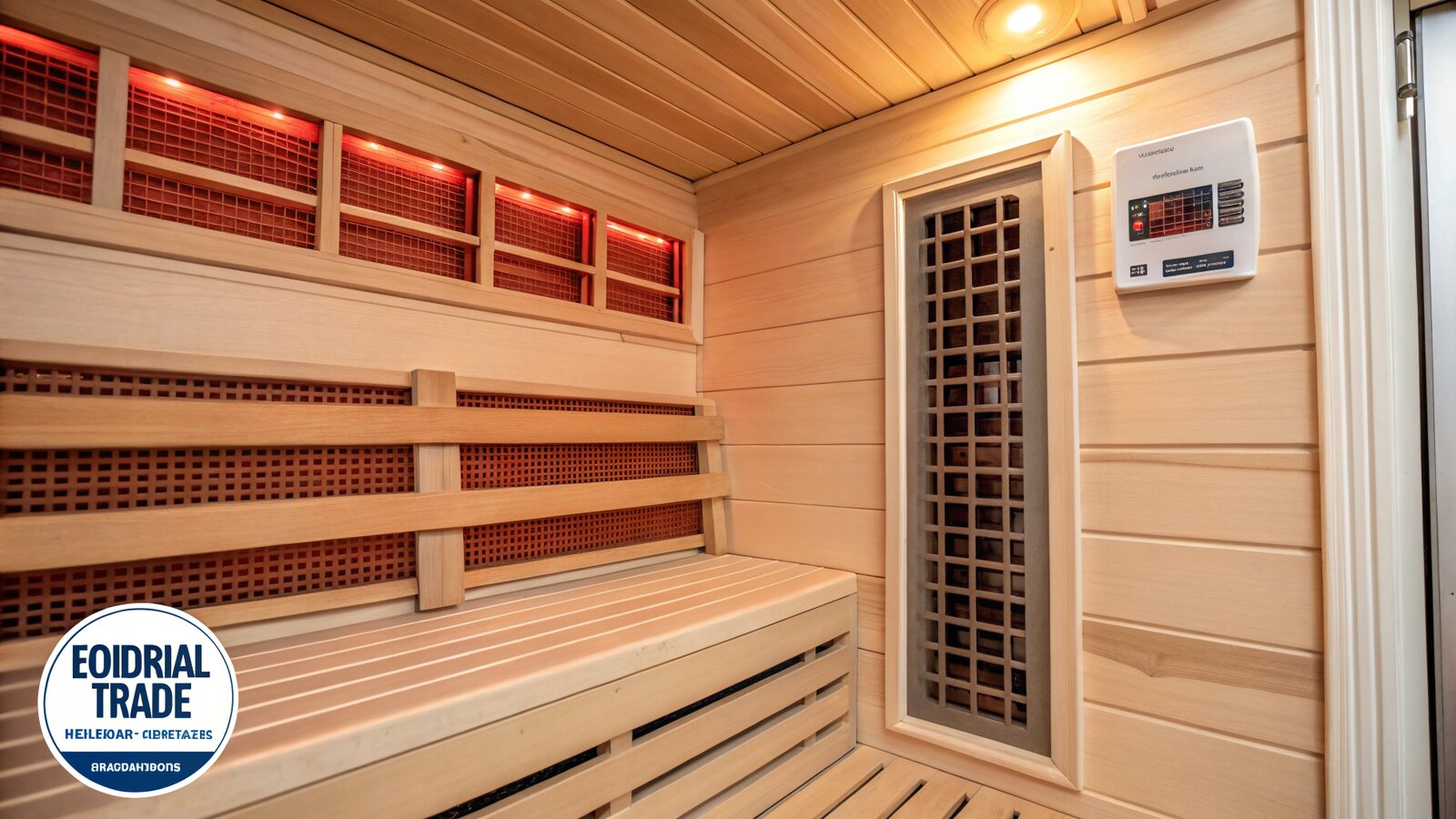
- Carbon panels: large, flat, low-surface-temperature emitters that spread a wide, even field of far infrared across the body. Because they run cooler, they emit a higher proportion of longer far-infrared wavelengths and pose little burn risk on brief contact. They tend to be efficient and durable.
- Ceramic rods or plates: run much hotter and deliver concentrated, intense heat to specific zones. You feel strong warmth directly in front of a heater and less elsewhere. They can reach high surface temperatures, so placement matters.
Many quality cabins blend the two: carbon for broad coverage, ceramic for targeted intensity. Neither is universally “better”; carbon suits an even whole-body soak, ceramic suits hotter, more localised heat.
Near infrared heaters
Near infrared in saunas is produced either by LED arrays (low heat, light-led, the photobiomodulation approach) or, in some older designs, by incandescent near-infrared heat lamps that also throw off considerable warmth. LED panels are the modern, controllable choice and are what most current NIR and full-spectrum cabins use. If you see a cabin advertised with bulb-style “NIR heat lamps”, expect noticeably more warmth and glare than a flat LED array, and check the unit’s guarding and bulb-replacement cost.
Choosing for a UK home
Match the band to your actual goal rather than to the most impressive spec sheet.
- You want a relaxing sweat, warmth and possible cardiovascular benefit: a far infrared cabin with quality carbon (or carbon-and-ceramic) heaters is the straightforward choice.
- You want skin and recovery effects: a near infrared or red/NIR LED panel, which can be a fraction of the size and cost of a cabin and needs no plumbing.
- You want both and have the room: a full-spectrum cabin, with the wavelengths confirmed in writing.
Practical checks for any UK purchase: confirm the electrical requirement against a standard socket; measure the footprint, including door swing and ceiling height; ask about low-EMF construction if that concerns you; and check the warranty terms on the heaters specifically, since they are the part that fails. Avoid any seller quoting hard medical cures or specific “toxins removed” figures, as that is a reliable marketing red flag.
Safety basics
Heat is the active ingredient, so treat it with respect. Hydrate well, keep early sessions short, and stop if you feel dizzy or unwell. Prolonged sessions can cause dehydration and heat exhaustion. Anyone who is pregnant, has a cardiovascular condition, low blood pressure, or takes medication affecting heart rate, blood pressure or sweating (including diuretics, beta-blockers and some antihistamines) should speak to a GP before regular use. Older adults are more prone to dizziness in dry heat. Do not use a sauna after drinking alcohol. None of the benefits discussed here are worth ignoring those signals for.
Frequently asked questions
Is far infrared or near infrared better for a home sauna?
For a traditional sweat-and-relax experience, far infrared is better, because it heats the body and drives sweating at a comfortable air temperature. Near infrared is better suited to skin and recovery goals via LED panels and produces almost no sweat on its own. They are tools for different jobs.
Does near infrared penetrate deeper than far infrared?
At a cellular level, yes: shorter near-infrared wavelengths are absorbed deeper in tissue, which is why they are used for photobiomodulation. Far infrared is absorbed more at the skin surface but warms a large area and provokes a stronger sweat. “Deeper” does not mean “warmer all over”.
What is a full-spectrum infrared sauna?
It is a cabin fitted with emitters spanning near, mid and far infrared, so you get FIR heat and sweating plus a near-infrared LED element in one unit. The term is loosely used, so verify which emitters and wavelengths are actually installed before buying.
Are infrared sauna health claims proven?
Partly. There is limited but moderate evidence that far-infrared saunas can help with blood pressure and some cardiovascular markers, and a growing base for red and near-infrared light in skin and recovery. Many claims, especially “detox” and weight-loss promises, are overstated or unsupported.
Carbon or ceramic heaters for far infrared?
Carbon panels give even, gentle, whole-body warmth at lower surface temperatures and good efficiency. Ceramic delivers hotter, more concentrated heat to specific areas. Many cabins combine both; choose based on whether you prefer an even soak or targeted intensity.
Will an infrared sauna run on a normal UK socket?
Many one- and two-person far infrared cabins run on a standard 13A socket, but larger or full-spectrum units can need a dedicated supply. Always confirm the electrical requirement before purchase, and factor the running cost into your decision.
Related guides
- Heat Pump vs Gas Boiler in 2026: Real Running Costs for UK Homes
- Underfloor Heating vs Radiators: UK Cost, Comfort and Retrofit Guide
- Home Sauna Cost UK 2026: Install Price and Running Cost per Session
- Porcelain vs Ceramic Tiles for Bathrooms and Wet Rooms: Cost, Durability and Where Each One Actually Belongs
- How to Stop Bathroom Condensation and Damp for Good: Extractor Fans vs MVHR Compared for UK Homes
- Microcement vs Tiles for a Wet Room: Real Costs, Cracking Risk and Which Lasts Longer in the UK
- Air Source vs Ground Source Heat Pumps: Which Suits a UK Home?
- How to Cut Your Heating Bills: Proven Steps for UK Homes
- Home Wellness News: June 2026
- 1-Person vs 2-Person Infrared Sauna: Which Size Is Right for You?
- Carbon vs Ceramic Infrared Sauna Heaters: What’s the Difference?
- How Much Does It Cost to Run an Infrared Sauna at Home? (UK Energy Costs)
- What to Look for When Buying an Infrared Sauna: 12 Questions to Ask First
- Are Infrared Saunas Worth It? An Honest Look at the Cost vs Benefits
- Sauna and Home Wellness News: Mid-June 2026
- Sauna Blanket vs Infrared Sauna: Which Is Actually Worth It?
- Red Light Therapy vs Infrared Sauna: Benefits and Key Differences
- Infrared Sauna vs Steam Room: Heat, Benefits and Home Setup Compared
- Home Wellness News: Late June 2026
- Infrared Sauna Benefits: What the Evidence Actually Shows
- Infrared Sauna for Weight Loss: Does It Really Burn Fat?
- Infrared Sauna for Skin: Collagen, Glow and Anti-Ageing Explained
- Home Wellness News: Early July 2026
- Infrared Sauna Detox: What Your Sweat Can and Can’t Remove
- Infrared Sauna Before or After a Workout? The Best Timing for Recovery
- What to Wear in an Infrared Sauna (and What to Avoid)
- Home Wellness News: Mid-July 2026
- Infrared Sauna for Beginners: A First-Month Session Plan
- Infrared Sauna Temperature and Session Length: A UK Guide
- Infrared Sauna Blanket UK: The Complete Buyer’s Guide
- Do Sauna Blankets Actually Work? What the Evidence Shows
- How to Use a Sauna Blanket: Setup, Timing and Cleaning
- Are Infrared Sauna Blankets Safe? EMF, Burns and Skin Contact
- Home Wellness News: Mid-July 2026
- Sauna Blanket vs Sauna Dome vs Tent: Which Portable Option Wins?
- Contrast Therapy at Home: How to Combine Sauna and Cold Plunge
- Cold Plunge Benefits: What Ice Baths Do for Recovery and Mood
- Sauna Before or After Cold Plunge? The Right Order
- Ice Bath Temperature and Time: A Beginner’s Guide
- Best Cold Plunge Tubs for a Home Setup: UK Buyer’s Guide (2026)
- Home Wellness Room Ideas: Sauna, Cold Plunge and Recovery Space
- Where to Put an Infrared Sauna in Your House: 7 Best Locations
- Infrared Sauna Installation Requirements UK: Space and Electrics
- Can You Put an Infrared Sauna Outside? Garden Sauna Rules