
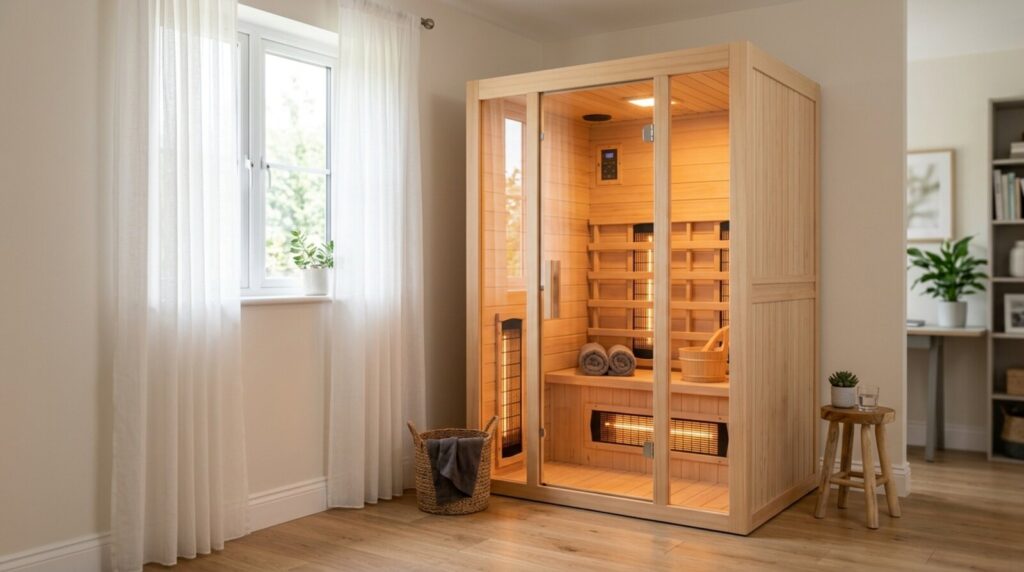
The honest answer to running an infrared sauna at home is that it costs less than most people fear, usually somewhere between the price of a coffee and a bus fare per session. The exact figure depends on three numbers: how many kilowatts your heater draws, how long you run it, and what you pay per unit of electricity. Get those three right and you can price any session to the penny.
This guide does the maths properly using current UK electricity prices, with worked examples for a single-person cabin, a 2-3 person cabin and a sauna blanket. If you are still weighing up which type to buy, that is a separate question covered elsewhere on The Shape House; here we are only dealing with what it costs to switch on.
The three numbers that decide your running cost
Every running-cost calculation is the same simple sum:
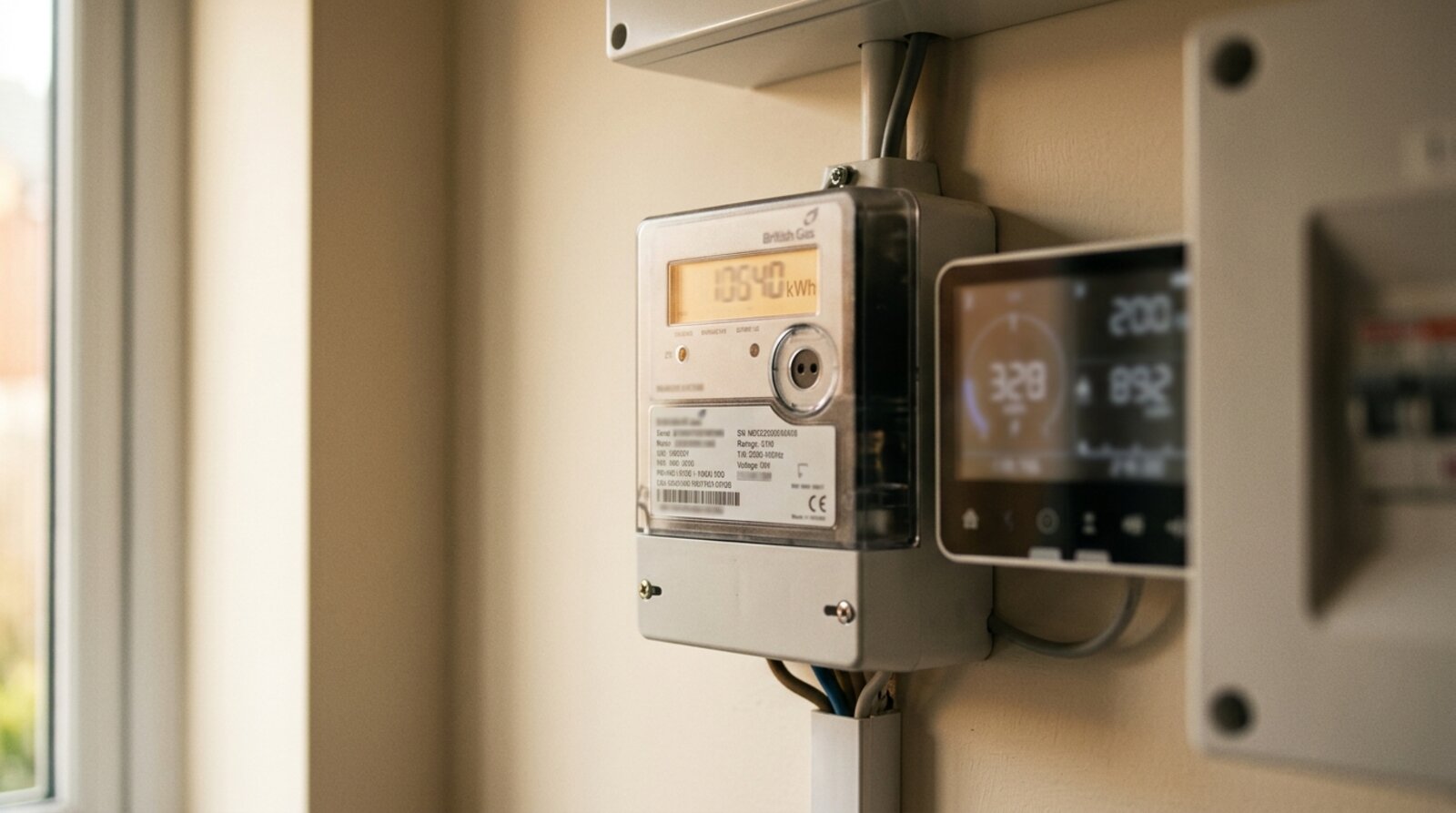
Power (kW) x time (hours) x price per kWh = cost.
So you need to know each part.
1. The price per kWh
For homes on a standard variable tariff paying by direct debit, the Ofgem energy price cap sets the unit rate. For the period 1 July to 30 September 2026 the cap puts the average electricity unit rate at 26.11p per kWh, with a daily standing charge of 57.19p, both averaged across England, Scotland and Wales and including VAT at 5 per cent. The exact figure varies a little by region and by supplier, and a fixed deal or an off-peak tariff can change it, but 26p per kWh is a fair number to plan around. You can check the current cap on the Ofgem energy price cap page.
The standing charge is a fixed daily fee you pay whether or not you use the sauna, so it does not belong in the per-session sum. We are pricing the electricity the sauna actually draws.
2. The power draw
This is printed on the unit’s rating plate or in the specification sheet, in watts or kilowatts (1,000 watts = 1 kW). As a rough guide for infrared cabins sold in the UK:
- 1-person cabin: typically 1.1 kW to 1.8 kW, often around 1.5 kW.
- 2-3 person cabin: typically 1.5 kW to 2.2 kW, often around 1.75 kW.
- 4-person cabin: usually up to around 3.0 to 3.5 kW.
- Infrared sauna blanket: much lower, commonly 150 W to 600 W, often around 400 W.
One thing worth knowing: the rated wattage is the maximum draw. Once an infrared cabin reaches temperature, the heaters cycle on and off via the thermostat rather than running flat out, so average draw across a session is often lower than the nameplate figure. The numbers below use the full rating, which means they are a sensible upper estimate rather than an underestimate.
3. The session length
Most people run a session of 30 to 45 minutes. Infrared cabins also need very little preheating compared with a traditional Finnish sauna, because the panels warm your body directly rather than heating a large volume of air and rocks. A preheat of 10 to 15 minutes is typical, and you can choose whether to sit in during that time or not.
Worked examples at 26.11p per kWh
Here are the real numbers, rounded to the nearest penny. Each uses the July 2026 cap rate of 26.11p per kWh.
1-person cabin (1.5 kW)
- 30-minute session: 1.5 kW x 0.5 h = 0.75 kWh = about 20p.
- 45-minute session: 1.5 kW x 0.75 h = 1.125 kWh = about 29p.
- Add a 15-minute preheat at full draw and a 45-minute session rises to roughly 39p.
2-3 person cabin (1.75 kW)
- 30-minute session: 1.75 kW x 0.5 h = 0.875 kWh = about 23p.
- 45-minute session: 1.75 kW x 0.75 h = 1.3125 kWh = about 34p.
- With a 15-minute preheat, a 45-minute session comes to roughly 46p.
Split that 2-3 person cost between two or three people sharing the session and the per-person figure drops below the cost of a single-person cabin.
Infrared sauna blanket (400 W)
- 45-minute session: 0.4 kW x 0.75 h = 0.3 kWh = about 8p.
- A full hour: 0.4 kW x 1 h = 0.4 kWh = about 10p.
A blanket is the cheapest option to run by a wide margin, simply because it has nowhere near the surface area or heater wattage of a cabin.
What that adds up to per week, month and year
Take a realistic habit of four sessions a week. Using the 45-minute figures above without preheat:
- 1-person cabin: about 29p x 4 = roughly £1.16 a week, about £5 a month, about £60 a year.
- 2-3 person cabin: about 34p x 4 = roughly £1.36 a week, about £5.90 a month, about £71 a year.
- Sauna blanket: about 8p x 4 = roughly 32p a week, about £1.40 a month, under £17 a year.
Even daily use of a 2-3 person cabin lands at roughly £2.40 a week, or around £124 a year. For most households the running cost is a minor line on the energy bill, far smaller than the purchase price spread over the unit’s life.
The factors that push your cost up or down
Heater type and wattage
Carbon, ceramic and full-spectrum heaters reach operating performance differently, but the headline figure that drives cost is total wattage, not the heater material. A cabin rated at 2.0 kW costs about a third more to run than one rated at 1.5 kW for the same session length. Always price from the actual rating plate rather than a marketing claim.
Preheat and session discipline
Preheating an empty cabin for 20 minutes before every session quietly adds to the bill. Because infrared warms the body rather than the air, many users get in earlier and let the session and preheat overlap. Switching off promptly at the end matters too: leaving heaters running while you shower is wasted electricity.
Insulation and room temperature
A well-built cabin with good door seals holds heat, so the thermostat lets the heaters idle more and the average draw falls. A cabin sited in a cold garage or an unheated outbuilding works harder than the same unit in a warm spare room, which nudges the real-world cost above the nameplate sums above.
Your tariff
The 26.11p figure is the price-cap average. If you are on a fixed deal the rate may differ, and if you are on a time-of-use tariff with cheap overnight or off-peak windows, running an evening or early-morning session in that window can cut the cost noticeably. Anyone with solar panels and a home battery can run a daytime session on self-generated power for close to nothing.
Number of users per session
Running cost is per session, not per person. A 2-3 person cabin used by two people costs the same to run as it would for one, so sharing sessions is the cheapest way to bring the per-head figure down.
How infrared compares with a traditional sauna
Traditional Finnish electric sauna heaters are far more powerful, commonly 4.5 kW to 9 kW, and they need a longer preheat to bring the room and stones up to temperature. Even allowing for thermostat cycling, that means a traditional session typically costs several times more per use than an infrared one. The lower running cost is one of the main practical reasons home buyers choose infrared, alongside the shorter warm-up and the lower operating temperature.
Frequently asked questions
How much does one infrared sauna session cost in the UK?
For a typical 1-person cabin drawing about 1.5 kW, a 45-minute session costs around 29p at the July 2026 price-cap rate of 26.11p per kWh. A 2-3 person cabin is closer to 34p. A sauna blanket is far cheaper at roughly 8p.
Are infrared saunas expensive to run?
No. Even with four cabin sessions a week the running cost is usually around £5 to £6 a month, because the heaters draw modest power and infrared needs little preheating. The blanket option costs only a pound or two a month.
How do I work out the cost for my own sauna?
Find the power rating in kilowatts on the unit’s rating plate, multiply by your session length in hours, then multiply by your electricity unit rate in pounds per kWh. For example, 1.6 kW x 0.75 h x 0.2611 equals about 31p.
Does an infrared sauna use a lot of electricity?
Compared with a traditional Finnish sauna, no. Infrared cabins typically draw 1.1 kW to 3.5 kW depending on size, against 4.5 kW to 9 kW for a traditional electric heater, and they reach a usable session faster, so they use considerably less energy per session.
Does a sauna blanket really cost less than a cabin?
Yes, by a wide margin. A blanket usually draws 150 W to 600 W, a fraction of a cabin’s heater wattage, so a 45-minute blanket session costs only around 8p versus roughly 29p to 34p for a cabin.
Will running a sauna raise my standing charge?
No. The standing charge is a fixed daily fee that applies whether or not you use the sauna, so it does not change with usage. Only the unit rate, the price per kWh, applies to the electricity your sauna actually draws.
Prices quoted are based on the Ofgem energy price cap for 1 July to 30 September 2026 and will change at each quarterly cap review, so check the live rate before relying on the exact pence figures.
Related guides
- Heat Pump vs Gas Boiler in 2026: Real Running Costs for UK Homes
- Underfloor Heating vs Radiators: UK Cost, Comfort and Retrofit Guide
- Home Sauna Cost UK 2026: Install Price and Running Cost per Session
- Porcelain vs Ceramic Tiles for Bathrooms and Wet Rooms: Cost, Durability and Where Each One Actually Belongs
- How to Stop Bathroom Condensation and Damp for Good: Extractor Fans vs MVHR Compared for UK Homes
- Microcement vs Tiles for a Wet Room: Real Costs, Cracking Risk and Which Lasts Longer in the UK
- Air Source vs Ground Source Heat Pumps: Which Suits a UK Home?
- How to Cut Your Heating Bills: Proven Steps for UK Homes
- Home Wellness News: June 2026
- 1-Person vs 2-Person Infrared Sauna: Which Size Is Right for You?
- Carbon vs Ceramic Infrared Sauna Heaters: What’s the Difference?
- What to Look for When Buying an Infrared Sauna: 12 Questions to Ask First
- Are Infrared Saunas Worth It? An Honest Look at the Cost vs Benefits
- Sauna and Home Wellness News: Mid-June 2026
- Sauna Blanket vs Infrared Sauna: Which Is Actually Worth It?
- Red Light Therapy vs Infrared Sauna: Benefits and Key Differences
- Far Infrared vs Near Infrared Sauna: Which Wavelength Do You Need?
- Infrared Sauna vs Steam Room: Heat, Benefits and Home Setup Compared
- Home Wellness News: Late June 2026
- Infrared Sauna Benefits: What the Evidence Actually Shows
- Infrared Sauna for Weight Loss: Does It Really Burn Fat?
- Infrared Sauna for Skin: Collagen, Glow and Anti-Ageing Explained
- Home Wellness News: Early July 2026
- Infrared Sauna Detox: What Your Sweat Can and Can’t Remove
- Infrared Sauna Before or After a Workout? The Best Timing for Recovery
- What to Wear in an Infrared Sauna (and What to Avoid)
- Home Wellness News: Mid-July 2026
- Infrared Sauna for Beginners: A First-Month Session Plan
- Infrared Sauna Temperature and Session Length: A UK Guide
- Infrared Sauna Blanket UK: The Complete Buyer’s Guide
- Do Sauna Blankets Actually Work? What the Evidence Shows
- How to Use a Sauna Blanket: Setup, Timing and Cleaning
- Are Infrared Sauna Blankets Safe? EMF, Burns and Skin Contact
- Home Wellness News: Mid-July 2026
- Sauna Blanket vs Sauna Dome vs Tent: Which Portable Option Wins?
- Contrast Therapy at Home: How to Combine Sauna and Cold Plunge
- Cold Plunge Benefits: What Ice Baths Do for Recovery and Mood
- Sauna Before or After Cold Plunge? The Right Order
- Ice Bath Temperature and Time: A Beginner’s Guide
- Best Cold Plunge Tubs for a Home Setup: UK Buyer’s Guide (2026)
- Home Wellness Room Ideas: Sauna, Cold Plunge and Recovery Space
- Where to Put an Infrared Sauna in Your House: 7 Best Locations
- Infrared Sauna Installation Requirements UK: Space and Electrics
- Can You Put an Infrared Sauna Outside? Garden Sauna Rules