
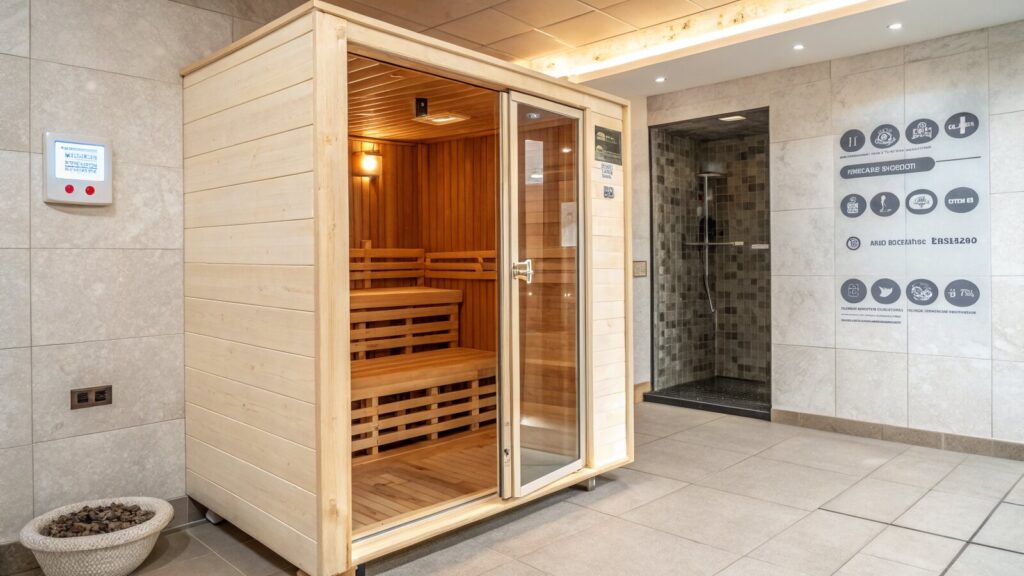
If you are weighing up an infrared sauna vs steam room for your home or your gym sessions, the short answer is that they do similar things in very different ways. An infrared sauna uses gentle, dry radiant heat to warm your body directly. A steam room surrounds you with hot, almost fully saturated wet air. Both make you sweat, both help you relax, and both have a loyal following, but they suit different goals, different bodies and very different rooms at home. This guide compares the heat, the benefits and the practicalities so you can decide which one is worth your space and money.
How each one heats you
The core difference is the method. An infrared sauna uses infrared heaters to emit radiant heat that warms your skin and body directly, much like the sun does on a clear day, without first heating the air around you to a high temperature. A steam room works the opposite way: a generator boils water to fill a sealed, tiled room with hot vapour, so the warmth reaches you through moist air sitting at close to 100 per cent humidity. A traditional Finnish sauna, by contrast, heats the air to a high temperature with low humidity. Infrared is dry and direct; steam is wet and enveloping.
Temperature and humidity compared
Infrared saunas run cooler than people expect, typically around 45C to 60C, because they do not need to superheat the air to warm you. Steam rooms sit lower still on the thermometer, often around 40C to 45C, but the near total humidity makes them feel far hotter and more intense than the number suggests, because sweat cannot evaporate to cool you. A traditional sauna is hotter again, often 70C to 100C with very low humidity. So if you find high heat hard to tolerate, the lower air temperature of an infrared cabin is often the easier introduction, while a steam room delivers a heavier, more smothering kind of heat.
Benefits of an infrared sauna
The appeal of infrared is a long, comfortable sweat at a gentler air temperature. Regular heat sessions are widely used for relaxation, easing muscle tension and aches after exercise, and a feeling of recovery and better sweat. Because the heat is dry and lower, many people can stay in longer and find it more pleasant than a fierce traditional sauna. It is worth being honest about the evidence: much of the strongest research on heat bathing comes from traditional Finnish saunas rather than infrared, including long-term Finnish work linking frequent sauna use to cardiovascular benefits (Laukkanen et al., 2015). Infrared has a smaller evidence base, so treat the strongest detox and weight-loss claims with caution and view it mainly as a comfortable, relaxing heat therapy.
Benefits of a steam room
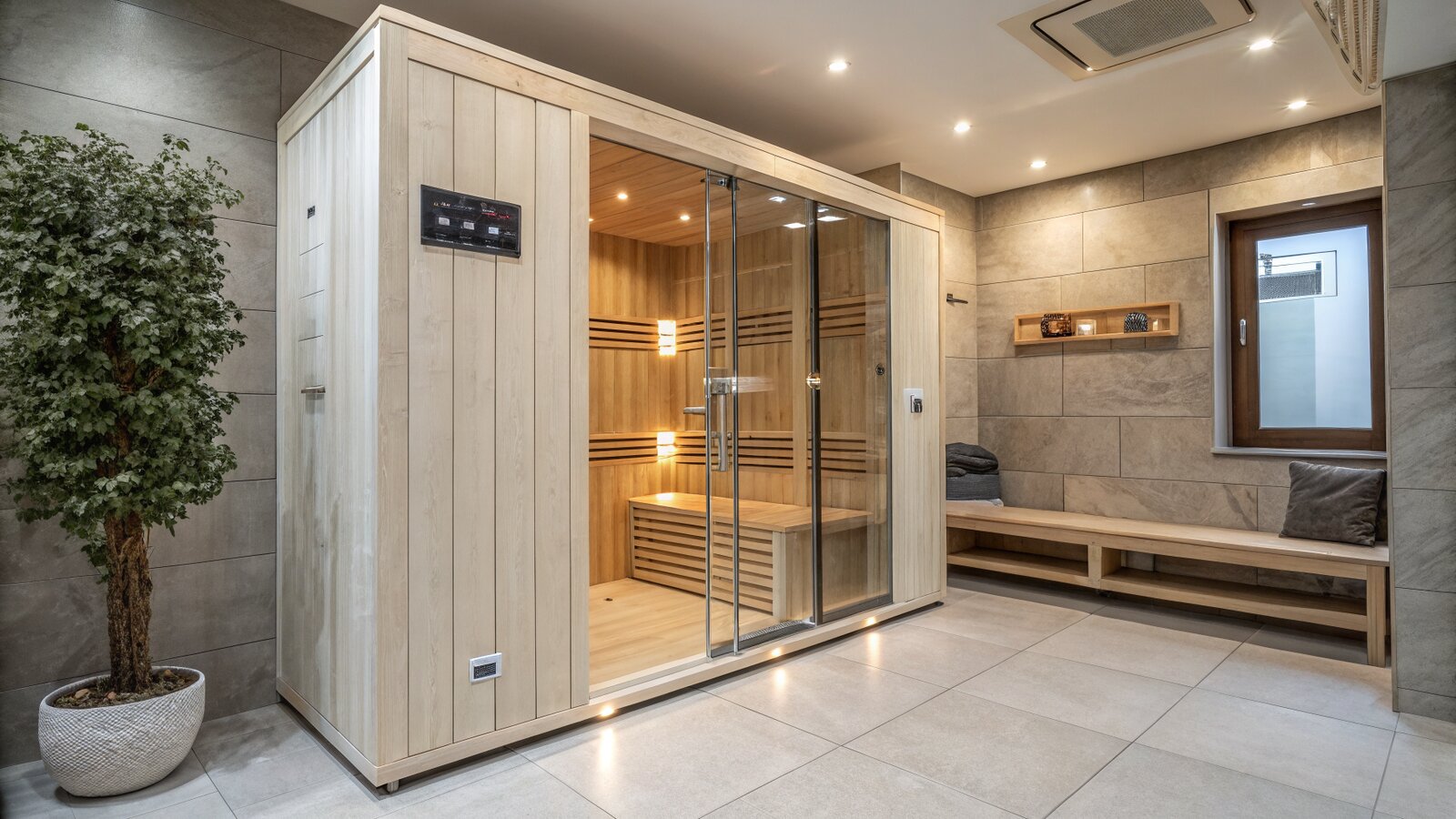
A steam room’s signature benefit is the moist air itself. The humidity can help loosen congestion and make breathing feel easier, which is why people with a stuffy nose or tight chest often prefer it, and the warm vapour leaves skin feeling soft and hydrated as pores open. Like any heat session it is relaxing and a pleasant way to wind down after a workout. The trade-offs are practical: that warm, wet environment is ideal for bacteria and mould if a room is not cleaned and ventilated well, and the humidity can feel overwhelming if you do not like heavy heat.
Which is better for you?
There is no single winner; it depends on what you want. For post-exercise recovery and muscle relaxation in comfort, an infrared sauna is a strong pick. For respiratory comfort, congestion and a skin-softening glow, a steam room has the edge. If you cannot tolerate intense heat, infrared’s lower air temperature is usually the kinder option. If you love the feeling of being wrapped in heat, steam delivers it. Whichever you choose, the basics of safe use are the same: keep sessions sensible in length, do not use either after alcohol, drink water before and after, and step out if you feel dizzy or unwell.
Installing one at home
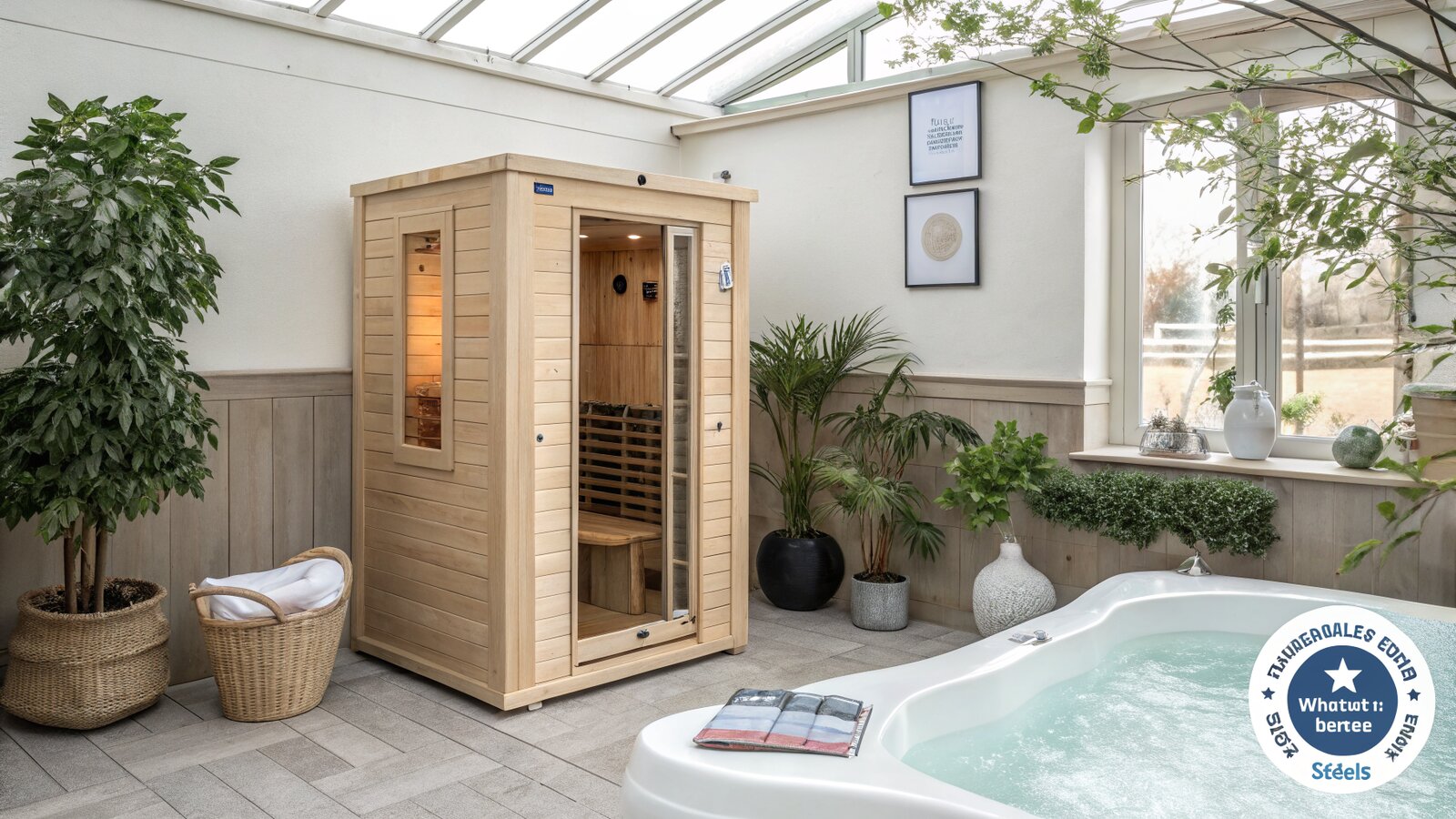
At home the two are not equally easy to fit. An infrared sauna is the simpler project: many are pre-built cabins that need only floor space and, depending on the model, a standard or dedicated socket, with no plumbing and little structural work. A steam room is a bigger commitment, because it needs a fully sealed and tanked enclosure, a steam generator, proper drainage and strong ventilation to manage the constant moisture, which is closer to a wet-room build than dropping in a cabin. That is why home wellness rooms more often feature an infrared cabin, sometimes paired with a cold plunge, than a built-in steam room. For more on planning a home wellness space, see the Shape House homepage.
Frequently asked questions
Is an infrared sauna or steam room better for detox?
Both make you sweat, but the idea that sweating removes meaningful toxins is overstated for either. Your liver and kidneys do the real work. Choose between them on comfort and goals, such as recovery and relaxation for infrared or respiratory comfort and skin for steam, rather than on detox claims.
Which gets you hotter, infrared or steam?
By air temperature, infrared is warmer, around 45C to 60C against roughly 40C to 45C for a steam room. But the near total humidity of a steam room makes it feel hotter and more intense, because your sweat cannot evaporate to cool you.
Is a steam room good for your skin?
Many people find the warm, humid air leaves skin feeling soft and hydrated as pores open and you sweat. It is a pleasant routine, though it is not a substitute for a proper skincare regime, and you should rinse and moisturise afterwards.
Can you have a steam room at home?
Yes, but it is a significant build. A home steam room needs a sealed, tanked and tiled enclosure, a steam generator, drainage and good ventilation to handle the moisture. It is far more involved than an infrared cabin, which usually just needs floor space and a power supply.
How long should you spend in an infrared sauna or steam room?
Keep sessions moderate and listen to your body, building up gradually rather than pushing through discomfort. Stay hydrated, avoid either after drinking alcohol, and leave straight away if you feel light-headed, faint or unwell.
Related guides
- Heat Pump vs Gas Boiler in 2026: Real Running Costs for UK Homes
- Underfloor Heating vs Radiators: UK Cost, Comfort and Retrofit Guide
- Home Sauna Cost UK 2026: Install Price and Running Cost per Session
- Porcelain vs Ceramic Tiles for Bathrooms and Wet Rooms: Cost, Durability and Where Each One Actually Belongs
- How to Stop Bathroom Condensation and Damp for Good: Extractor Fans vs MVHR Compared for UK Homes
- Microcement vs Tiles for a Wet Room: Real Costs, Cracking Risk and Which Lasts Longer in the UK
- Air Source vs Ground Source Heat Pumps: Which Suits a UK Home?
- How to Cut Your Heating Bills: Proven Steps for UK Homes
- Home Wellness News: June 2026
- 1-Person vs 2-Person Infrared Sauna: Which Size Is Right for You?
- Carbon vs Ceramic Infrared Sauna Heaters: What’s the Difference?
- How Much Does It Cost to Run an Infrared Sauna at Home? (UK Energy Costs)
- What to Look for When Buying an Infrared Sauna: 12 Questions to Ask First
- Are Infrared Saunas Worth It? An Honest Look at the Cost vs Benefits
- Sauna and Home Wellness News: Mid-June 2026
- Sauna Blanket vs Infrared Sauna: Which Is Actually Worth It?
- Red Light Therapy vs Infrared Sauna: Benefits and Key Differences
- Far Infrared vs Near Infrared Sauna: Which Wavelength Do You Need?
- Home Wellness News: Late June 2026
- Infrared Sauna Benefits: What the Evidence Actually Shows
- Infrared Sauna for Weight Loss: Does It Really Burn Fat?
- Infrared Sauna for Skin: Collagen, Glow and Anti-Ageing Explained
- Home Wellness News: Early July 2026
- Infrared Sauna Detox: What Your Sweat Can and Can’t Remove
- Infrared Sauna Before or After a Workout? The Best Timing for Recovery
- What to Wear in an Infrared Sauna (and What to Avoid)
- Who Should Not Use an Infrared Sauna? Safety Guide