
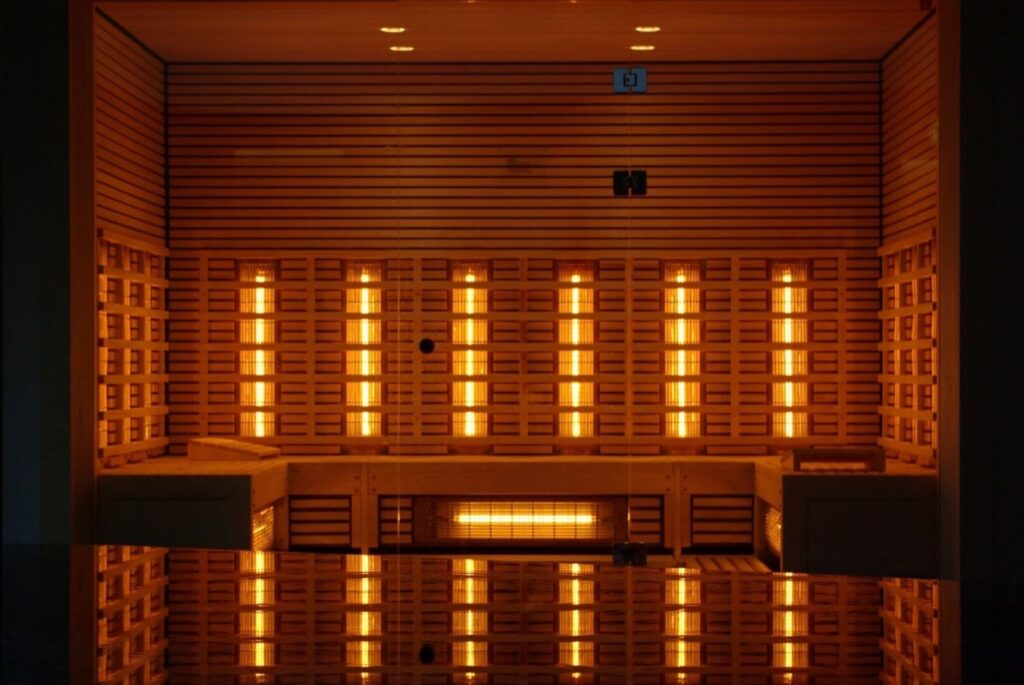
Deciding where to put an infrared sauna in your house matters almost as much as which sauna you buy. Get the location right and you will actually use it, several times a week, with a socket to hand and a shower nearby. Get it wrong and a beautiful cabin ends up as an expensive clothes rail in a cold garage. An infrared sauna is more forgiving than a traditional steam sauna because it runs at a lower temperature and produces very little moisture, which opens up rooms you might not expect. This guide walks through the seven best locations and the practical checks that decide between them.
What the location has to provide
Before the room-by-room tour, four things govern where a home infrared sauna can go.
- Power. Most one and two-person cabins draw up to about 1.8kW and run from a standard 13-amp socket, ideally a dedicated one with nothing else on the circuit. Larger cabins from roughly 1.9kW to 2.9kW usually need a 16-amp supply or a hardwired connection under Part P of the Building Regulations, and anything above 3kW needs a heavier supply and a registered electrician. Check the plate rating before you commit to a spot.
- Floor. A two-person cabin can weigh 150kg to 300kg once loaded. The floor must be level and firm. Hard flooring such as tile, vinyl or sealed concrete is ideal; on carpet, put a protective board or mat underneath.
- Space and clearance. Allow room for the door to swing and leave an air gap of around 50mm to 100mm behind and beside the cabin for the rear vents and cabling. Most cabins need about 1.9m of ceiling height.
- Environment. A dry, heated part of the house is kinder to the timber than a cold, damp one, which is why an unheated garage is not always the easy answer it looks.
1. A spare bedroom
A spare or guest bedroom is the most popular choice, and for good reason. It is heated, dry, carpeted rooms take a protective mat easily, and there is usually a 13-amp socket within reach. A one or two-person cabin fits neatly into a corner and leaves the room usable for guests. If the sauna will be used daily, this is often the location people are happiest with a year later.
2. A master bedroom or en-suite
Placing the cabin in a large bedroom or beside an en-suite puts a shower within a few steps, which makes the cool-down after a session effortless. The low humidity of infrared means it will not fog the room the way a steam cabin would. Keep the cabin out of the bathroom’s wettest zones and make sure any socket used sits well away from the shower and basin.
3. A basement or cellar
Basements are a natural home for a wellness setup: solid floors, plenty of headroom in a converted cellar, and a self-contained space away from the rest of the house. The one thing to check is damp. A basement prone to condensation needs tanking or a dehumidifier before you site timber down there, and good ventilation so the room does not feel stale.
4. A utility room or large landing
Compact one-person cabins fit surprisingly well into a utility room or a wide landing. Both tend to have hard floors and a nearby socket, and both are heated. The trade-off is space to cool down and undress in private, so this suits smaller cabins and single users rather than a two-person model.
5. A garden room or outbuilding
A dedicated garden room or insulated outbuilding is the aspirational option and keeps the sauna out of the main house entirely. It works well provided the building is insulated, heated enough to stay above freezing in winter, and has a suitable electrical supply run out to it by a qualified electrician. An uninsulated shed is a false economy: the cabin takes longer to warm and the cold, damp air is hard on the wood.
6. A converted garage
A garage offers floor space and a solid slab, and a part-converted garage with insulation and heating makes an excellent sauna room. The caution is the same as for outbuildings: a bare, unheated garage is cold and often damp, which slows warm-up and shortens the life of the cabin. If you go this route, insulate at least the immediate area and run a proper circuit.
7. A conservatory or garden-facing room
A conservatory or a bright garden room can be a lovely setting, with a view to enjoy through the session. Watch two things: the cabin should not sit in direct, baking sun that overheats the timber, and single-glazed conservatories can be cold in winter, which works against you. In a well-insulated modern conservatory, though, it is a genuinely pleasant spot.
Privacy, noise and the cool-down
Two practical points get overlooked when people focus on the room itself. First, privacy: you will be undressed, so a room with a lockable door or one away from the front of the house is more relaxing than a through-route like a hallway. Second, the cool-down. The most satisfying part of a session is stepping out and rinsing off, so a location within a few steps of a shower turns the sauna from a chore into a ritual. If you can pair the cabin with a nearby bathroom or wet room, do. It is the difference between a sauna you use twice and one you use all winter.
Where not to put it
Avoid rooms that are permanently cold and damp with no heating, directly against a shower or bath where water can reach the cabin, or anywhere the only socket is shared with high-load appliances. Tight cupboards and alcoves with no clearance behind the vents are also out, as the cabin needs a little air around it. Lofts are usually a poor choice too: getting a 200kg cabin up there is a struggle, and the floor may not be rated for the load without strengthening.
Frequently asked questions
Can you put an infrared sauna in a normal bedroom?
Yes, and it is the most common choice. Bedrooms are heated and dry, and a one or two-person cabin runs from a standard 13-amp socket. Put a protective mat under it on carpet and leave a small gap behind for ventilation.
Does an infrared sauna need special wiring?
Not usually for a small cabin. Models up to around 1.8kW plug into a normal dedicated socket. Larger cabins from about 1.9kW upward need a 16-amp or hardwired supply installed under Part P by a registered electrician, so check the rating before choosing a location.
Can an infrared sauna go in a bathroom?
It can, because infrared produces very little moisture, but keep the cabin and its socket away from the bath and shower zones and make sure the electrics are suitable for a bathroom. Being near a shower is actually a bonus for cooling down.
Is it safe to put an infrared sauna in a garage?
Yes, if the garage is insulated, stays above freezing and has a proper electrical supply. A bare, unheated, damp garage is a poor choice because the cabin warms slowly and the timber suffers over time.
How much space does an infrared sauna need?
A one-person cabin needs roughly one square metre of floor, a two-person cabin around 1.2 to 1.5 square metres, plus room for the door to open and a 50mm to 100mm gap behind for ventilation. Most cabins need about 1.9m of ceiling height.
The best location is simply the one that is warm, dry, has the right socket and is close enough to a shower that you will keep using it. Sort the power supply and the floor first, and the room almost picks itself. For more on choosing and setting up a home sauna, browse the guides on The Shape House, and read the government’s Approved Document P guidance if your cabin needs a hardwired supply.
Related guides
- Heat Pump vs Gas Boiler in 2026: Real Running Costs for UK Homes
- Underfloor Heating vs Radiators: UK Cost, Comfort and Retrofit Guide
- Home Sauna Cost UK 2026: Install Price and Running Cost per Session
- Porcelain vs Ceramic Tiles for Bathrooms and Wet Rooms: Cost, Durability and Where Each One Actually Belongs
- How to Stop Bathroom Condensation and Damp for Good: Extractor Fans vs MVHR Compared for UK Homes
- Microcement vs Tiles for a Wet Room: Real Costs, Cracking Risk and Which Lasts Longer in the UK
- Air Source vs Ground Source Heat Pumps: Which Suits a UK Home?
- How to Cut Your Heating Bills: Proven Steps for UK Homes
- Home Wellness News: June 2026
- 1-Person vs 2-Person Infrared Sauna: Which Size Is Right for You?
- Carbon vs Ceramic Infrared Sauna Heaters: What’s the Difference?
- How Much Does It Cost to Run an Infrared Sauna at Home? (UK Energy Costs)
- What to Look for When Buying an Infrared Sauna: 12 Questions to Ask First
- Are Infrared Saunas Worth It? An Honest Look at the Cost vs Benefits
- Sauna and Home Wellness News: Mid-June 2026
- Sauna Blanket vs Infrared Sauna: Which Is Actually Worth It?
- Red Light Therapy vs Infrared Sauna: Benefits and Key Differences
- Far Infrared vs Near Infrared Sauna: Which Wavelength Do You Need?
- Infrared Sauna vs Steam Room: Heat, Benefits and Home Setup Compared
- Home Wellness News: Late June 2026
- Infrared Sauna Benefits: What the Evidence Actually Shows
- Infrared Sauna for Weight Loss: Does It Really Burn Fat?
- Infrared Sauna for Skin: Collagen, Glow and Anti-Ageing Explained
- Home Wellness News: Early July 2026
- Infrared Sauna Detox: What Your Sweat Can and Can’t Remove
- Infrared Sauna Before or After a Workout? The Best Timing for Recovery
- What to Wear in an Infrared Sauna (and What to Avoid)
- Home Wellness News: Mid-July 2026
- Infrared Sauna for Beginners: A First-Month Session Plan
- Infrared Sauna Temperature and Session Length: A UK Guide
- Infrared Sauna Blanket UK: The Complete Buyer’s Guide
- Do Sauna Blankets Actually Work? What the Evidence Shows
- How to Use a Sauna Blanket: Setup, Timing and Cleaning
- Are Infrared Sauna Blankets Safe? EMF, Burns and Skin Contact
- Home Wellness News: Mid-July 2026
- Sauna Blanket vs Sauna Dome vs Tent: Which Portable Option Wins?
- Contrast Therapy at Home: How to Combine Sauna and Cold Plunge
- Cold Plunge Benefits: What Ice Baths Do for Recovery and Mood
- Sauna Before or After Cold Plunge? The Right Order
- Ice Bath Temperature and Time: A Beginner’s Guide
- Best Cold Plunge Tubs for a Home Setup: UK Buyer’s Guide (2026)
- Home Wellness Room Ideas: Sauna, Cold Plunge and Recovery Space
- Infrared Sauna Installation Requirements UK: Space and Electrics
- Can You Put an Infrared Sauna Outside? Garden Sauna Rules