
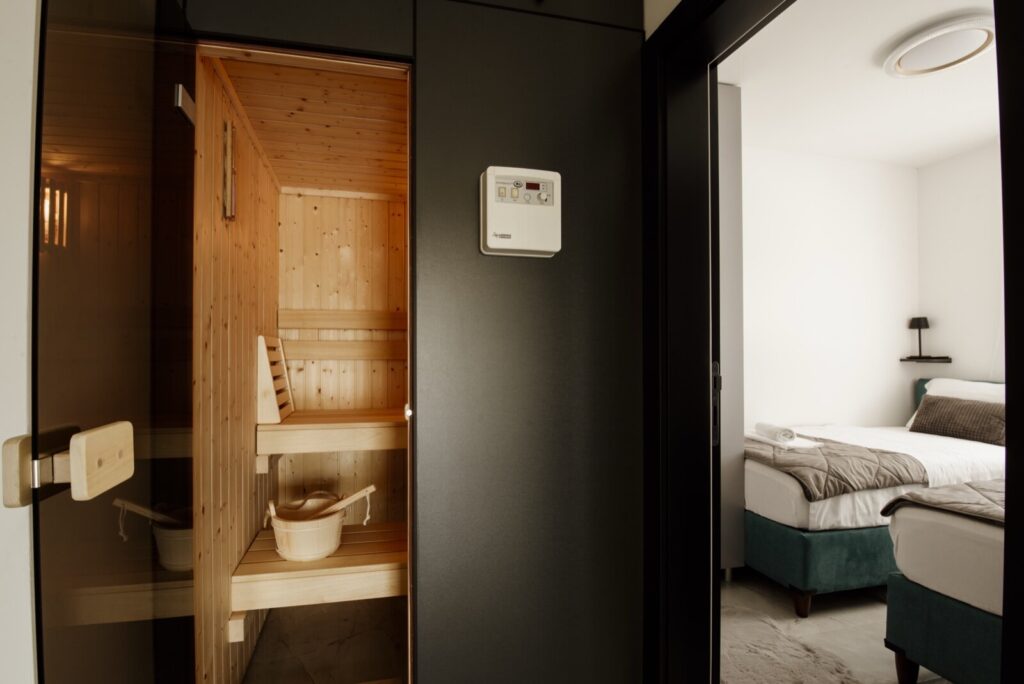
Can you put an infrared sauna outside? It is one of the most common questions from buyers who want a garden wellness space rather than giving up a room indoors. The honest answer is yes, you can, but not by simply wheeling a standard cabin onto the patio. An infrared sauna will live happily outdoors in the UK only when the structure around it is genuinely weatherproof, properly insulated and wired to the correct standard.
Get that right and a garden sauna is a superb addition. Get it wrong and you face damp, electrical faults, a voided warranty and a cabin that never gets warm on a cold morning. Here is what actually matters before you put an infrared sauna outside.
Can you put an infrared sauna outside? The short answer
Most infrared saunas sold for home use are designed and warrantied as indoor products. Their timber, glazing, heaters and control panels expect a dry, stable environment, not driving rain, frost and swings in humidity. Placing one straight into the open, or into an uninsulated shed, is the fast route to problems.
There are two legitimate ways to have an infrared sauna outdoors:
- A purpose-built outdoor cabin with a weatherproof shell, an IP-rated enclosure, proper insulation and emitters and controls rated for outdoor use.
- An indoor-rated sauna placed inside a weatherproofed garden room, which is the more reliable and often more comfortable route for the British climate.
Both work. What does not work is treating an indoor cabin as if it can shrug off the weather.
Why a standard infrared sauna is not built for the weather
Understanding the failure points helps you avoid them:
- Moisture and timber: the softwoods used in many cabins absorb damp, which leads to warping, splitting and mould over a winter of exposure.
- Electrics and water: heaters, wiring and touch controls are not sealed against rain unless specifically rated for it. Water and mains electricity outdoors is a safety issue, not a cosmetic one.
- Heat loss: infrared warms the body directly, but the cabin still needs to hold a comfortable ambient temperature. With no insulation around it, an outdoor cabin bleeds heat and struggles to feel warm on a cold day.
- Warranty: using an indoor-rated sauna outside almost always voids the manufacturer’s cover, so a fault becomes your bill.
The reliable route: an indoor sauna inside a weatherproof garden room
For most UK gardens, the best result comes from housing an indoor-rated infrared sauna inside an insulated, weatherproof garden room. The garden room takes the weather; the sauna stays in the dry, stable conditions it was built for.
A setup like this needs:
- A properly insulated shell in the walls, floor and roof, so the space holds warmth and does not sweat with condensation.
- Vapour control and ventilation to manage the moisture your body releases, keeping both the room and the cabin healthy.
- A dry, level base and a floor finish that copes with the odd splash.
- Sealed, correctly rated electrics run out to the building on their own protected circuit.
The bonus is comfort: a garden room gives you somewhere to cool down, store towels and step out of, rather than opening a cabin door straight into the rain. It turns a single appliance into a proper wellness space.
Electrics: what the regulations require
This is the part you must not cut corners on. Wiring a sauna and its supply is notifiable electrical work under Approved Document P of the Building Regulations in England and Wales, which means it has to be carried out and signed off by a competent, registered electrician.
In practice that involves:
- A dedicated, correctly sized circuit run from the consumer unit, sized to the cabin’s rating. Lower-powered infrared cabins often need a suitable protected circuit, while more powerful units may need a heavier supply.
- An IP-rated isolator within sight of the unit so it can be switched off safely.
- Weatherproof, correctly rated cabling and connections along the outdoor run.
- A certificate on completion, which you will want for insurance and any future house sale.
Do not let a general handyman improvise this. Outdoor mains electricity around a warm, occasionally damp cabin is exactly the situation the rules exist to protect.
Planning permission for a garden sauna
A garden sauna or the garden room housing it is usually treated as an outbuilding, and outbuildings often fall under permitted development, meaning you may not need a planning application. The usual conditions apply, and they are worth checking against your own plot:
- The building must not sit forward of the principal elevation of your house, so front gardens generally need full permission.
- Outbuildings must not cover more than half of the land around the original house.
- If any part is within two metres of a boundary, its overall height must not exceed 2.5 metres.
- Different, tighter rules apply to listed buildings, conservation areas, National Parks and Areas of Outstanding Natural Beauty.
Because these limits have detail and exceptions, confirm your situation with the official Planning Portal guidance on outbuildings or your local planning authority before you build. A lawful development certificate is a cheap way to remove doubt if you ever sell.
Running an outdoor infrared sauna through a British winter
Winter is when a well-planned outdoor sauna proves its worth and a rushed one disappoints. A few habits keep it working:
- Pre-heat for longer: on cold days give the cabin extra warm-up time so the ambient space, not just the emitters, feels comfortable.
- Insulate the base and surroundings: heat lost through a cold floor is heat you pay for and never feel.
- Manage condensation: ventilate after each session so moisture leaves rather than settling into timber.
- Protect the electrics: keep isolators and connections sealed and inspect them at the start of each winter.
Treated this way, an outdoor infrared sauna gives you the contrast of stepping from a warm cabin into cold air, which is part of the appeal, without the maintenance headaches that catch out anyone who simply put a cabin outside and hoped.
Frequently asked questions
Can you put an infrared sauna outside without a garden room?
Only if it is a purpose-built outdoor cabin with a weatherproof shell, an IP-rated enclosure and outdoor-rated heaters and controls. A standard indoor infrared sauna placed in the open will suffer from damp, heat loss and electrical risk, and using it outdoors usually voids the warranty. For indoor-rated cabins, housing them inside an insulated garden room is the safer route.
Do you need planning permission for a garden sauna?
Often not, because garden saunas usually count as outbuildings under permitted development. That depends on staying within the limits: not forward of the house, not covering more than half the garden, and no more than 2.5 metres high if within two metres of a boundary. Listed buildings and conservation areas have stricter rules, so check with the Planning Portal or your council.
Does an outdoor infrared sauna need a special electrical supply?
Yes. It needs a dedicated circuit sized to the cabin, an IP-rated isolator within sight of the unit and weatherproof cabling, all installed and certified by a registered electrician. This work is notifiable under Part P of the Building Regulations, so it must be signed off by a competent person rather than done informally.
Will an infrared sauna work in cold weather?
Infrared heats the body directly, so it still warms you in winter, but the cabin needs to hold a comfortable ambient temperature to feel pleasant. That means insulation around the sauna, a warm base and a longer pre-heat on cold days. An uninsulated outdoor cabin will feel cold and cost more to run.
Is a garden room or a dedicated outdoor cabin better for an infrared sauna?
For the UK climate, an indoor-rated sauna inside an insulated, weatherproof garden room is usually the more reliable and comfortable choice. It keeps the cabin dry and stable, gives you space to cool down and store towels, and protects your warranty. A purpose-built outdoor cabin is a valid alternative if you want the sauna standing alone.
Planning a garden wellness space and weighing your options? Explore more infrared sauna and home wellness guides on the The Shape House homepage.
Related guides
- Heat Pump vs Gas Boiler in 2026: Real Running Costs for UK Homes
- Underfloor Heating vs Radiators: UK Cost, Comfort and Retrofit Guide
- Home Sauna Cost UK 2026: Install Price and Running Cost per Session
- Porcelain vs Ceramic Tiles for Bathrooms and Wet Rooms: Cost, Durability and Where Each One Actually Belongs
- How to Stop Bathroom Condensation and Damp for Good: Extractor Fans vs MVHR Compared for UK Homes
- Microcement vs Tiles for a Wet Room: Real Costs, Cracking Risk and Which Lasts Longer in the UK
- Air Source vs Ground Source Heat Pumps: Which Suits a UK Home?
- How to Cut Your Heating Bills: Proven Steps for UK Homes
- Home Wellness News: June 2026
- 1-Person vs 2-Person Infrared Sauna: Which Size Is Right for You?
- Carbon vs Ceramic Infrared Sauna Heaters: What’s the Difference?
- How Much Does It Cost to Run an Infrared Sauna at Home? (UK Energy Costs)
- What to Look for When Buying an Infrared Sauna: 12 Questions to Ask First
- Are Infrared Saunas Worth It? An Honest Look at the Cost vs Benefits
- Sauna and Home Wellness News: Mid-June 2026
- Sauna Blanket vs Infrared Sauna: Which Is Actually Worth It?
- Red Light Therapy vs Infrared Sauna: Benefits and Key Differences
- Far Infrared vs Near Infrared Sauna: Which Wavelength Do You Need?
- Infrared Sauna vs Steam Room: Heat, Benefits and Home Setup Compared
- Home Wellness News: Late June 2026
- Infrared Sauna Benefits: What the Evidence Actually Shows
- Infrared Sauna for Weight Loss: Does It Really Burn Fat?
- Infrared Sauna for Skin: Collagen, Glow and Anti-Ageing Explained
- Home Wellness News: Early July 2026
- Infrared Sauna Detox: What Your Sweat Can and Can’t Remove
- Infrared Sauna Before or After a Workout? The Best Timing for Recovery
- What to Wear in an Infrared Sauna (and What to Avoid)
- Home Wellness News: Mid-July 2026
- Infrared Sauna for Beginners: A First-Month Session Plan
- Infrared Sauna Temperature and Session Length: A UK Guide
- Infrared Sauna Blanket UK: The Complete Buyer’s Guide
- Do Sauna Blankets Actually Work? What the Evidence Shows
- How to Use a Sauna Blanket: Setup, Timing and Cleaning
- Are Infrared Sauna Blankets Safe? EMF, Burns and Skin Contact
- Home Wellness News: Mid-July 2026
- Sauna Blanket vs Sauna Dome vs Tent: Which Portable Option Wins?
- Contrast Therapy at Home: How to Combine Sauna and Cold Plunge
- Cold Plunge Benefits: What Ice Baths Do for Recovery and Mood
- Sauna Before or After Cold Plunge? The Right Order
- Ice Bath Temperature and Time: A Beginner’s Guide
- Best Cold Plunge Tubs for a Home Setup: UK Buyer’s Guide (2026)
- Home Wellness Room Ideas: Sauna, Cold Plunge and Recovery Space
- Where to Put an Infrared Sauna in Your House: 7 Best Locations
- Infrared Sauna Installation Requirements UK: Space and Electrics